
CoreXY3DPrinting&PA-CFPrototypingforUAV& RoboticsComponents
Engineering analysis of carbon-fiber reinforced nylon (PA-CF), high-speed kinematics, and additive manufacturing for aerospace drone frames and robotics enclosures.
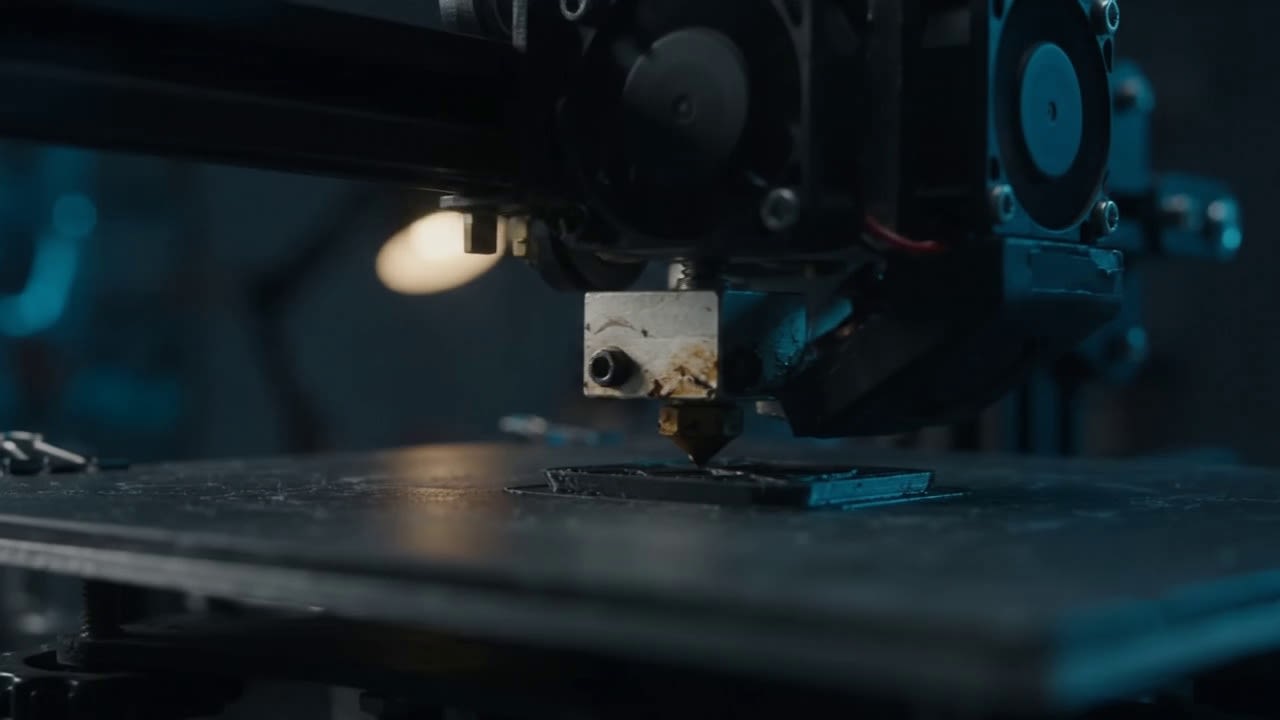
1. The Role of Additive Manufacturing in Drone Prototyping
Traditional UAV manufacturing relies on subtractive CNC milling of carbon fiber composite plates and aircraft-grade 6061/7075 aluminum blocks. While CNC milling produces unmatched planar stiffness, it suffers from severe limitations: high setup costs, fixture requirements, waste material, and an inability to manufacture complex internal geometries such as hollow antenna ducts, integrated wire conduits, or conformal camera enclosures.
Industrial additive manufacturing bridges this gap. By deploying high-temperature 3D printing, engineering teams can design, print, and flight-test custom avionics bays, aerodynamic fairings, and structural motor brackets within 24 hours of CAD completion, slashing development cycles from weeks to single days.
2. Thermoplastic Material Engineering: PA-CF, PETG-CF, and PC
Standard consumer 3D printing filaments like PLA (Polylactic Acid) are unsuitable for functional flight hardware due to their low heat deflection temperature (~55°C) and brittle fracture under impact. High-performance aerospace applications require engineering composites:
3. CoreXY Kinematics vs. Cartesian Motion Systems
Printing abrasive, high-temperature composite filaments demands rigid machine kinematics. Traditional Cartesian 'bed-slinger' printers move the heavy build plate along the Y-axis. At print speeds above 80 mm/s, the momentum of the moving bed induces ringing, layer misalignment, and ghosting artifacts.
CoreXY kinematics solve this by mounting both the X and Y stepper motors rigidly to the stationary outer frame, moving only a lightweight carbon-rod toolhead via two synchronized timing belts. The print bed moves only along the vertical Z-axis. This reduces moving mass by up to 60%, allowing sustained printing speeds of 250 mm/s to 500 mm/s with 20,000 mm/s² acceleration while preserving sub-0.05mm dimensional tolerances required for press-fit bearings and motor mounts.
Furthermore, engineering materials like PA-CF require fully enclosed heated chambers (50°C–70°C) and hardened steel or ruby nozzles (300°C) to prevent nozzle abrasion from carbon fibers and eliminate inter-layer warping during cooling.
4. Design for Additive Manufacturing (DFAM) in UAV Components
Designing components for 3D printing requires adhering to anisotropic mechanical principles: parts are consistently stronger along their X-Y print plane than across the Z-axis layer boundaries.
5. Multi-Material Integration: TPU Vibration Dampening
High-frequency motor vibrations (200Hz to 600Hz) transmitted to the flight controller gyro induce filter phase lag and cause video jello in FPV cameras. Thermoplastic Polyurethane (TPU 95A / 90A) is an elastomeric filament with outstanding shock absorption.
By printing custom 3D-printed TPU camera isolators, antenna mast mounts, and flight controller soft-mount grommets, mechanical resonance is decoupled from sensitive sensors. TPU also exhibits near-infinite fatigue life, flexing during hard landings without snapping.
6. MedhaArc On-Demand Rapid Fabrication Workflows
Through MedhaArc's rapid prototyping and engineering consultation division (Hardware & Software Solutions), we provide on-demand additive manufacturing for aerospace enterprises, drone racing teams, and industrial robotics developers.
From CAD validation and FEA stress simulation to high-speed CoreXY PA-CF fabrication and dimensional CMM inspection, our in-house manufacturing ecosystem delivers functional, flight-ready prototypes tailored to strict weight budgets and thermal specifications.
Build Real Aerospace & Autonomous Robotics Hardware
At MedhaArc Labs, we transition students and engineering learners from passive tutorials to physical engineering. Explore our hands-on drone flight controller kits, 6-DOF robotic arm testbenches, and institutional STEAM curriculum.