
EducationalDrone&RoboticsKitSelectionGuide: Solder-FreeMicroTrainersvs.CarbonFPVPlatforms
Evaluating code-to-fly architectures, microcontroller processing, classroom safety, and curriculum integration for STEAM educators and university engineering labs.
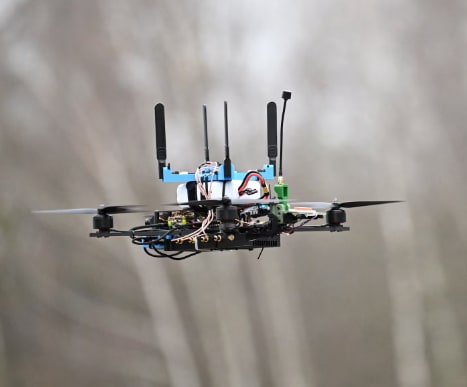
1. The Classroom Reality: Safety, Durability, and Setup Time
Teaching robotics and aerodynamics in an academic setting introduces operational constraints rarely encountered by individual makers. Typical classroom periods last 45 to 90 minutes. If a drone kit requires hours of delicate micro-soldering, intricate thread-locking, and complicated radio binding, students spend entire semesters troubleshooting cold solder joints rather than learning flight physics or control algorithms.
Safety is paramount. Standard 5-inch racing quadcopters spinning high-RPM carbon props on 6S voltage carry significant kinetic energy and are strictly unsuitable for indoor classroom environments. Educational drone platforms must be categorized by their kinetic risk profile: sub-50g indoor trainers with continuous duct guards vs. sub-250g outdoor airframes designed for flight testing on designated sports fields.
2. The Code-to-Fly Architecture: ESP32-S3 & Block Coding
For computer science introductory classes, middle schools, and maker clubs, the priority is understanding how software instructions translate into physical movement. Platforms like the MedhaArc ESP-Micro STEAM Drone Kit are engineered specifically for this tier.
Weighing just 25 grams with an all-up snap-fit ePLA chassis, the ESP-Micro runs on the Seeed Studio XIAO ESP32-S3 module (dual-core 240MHz Xtensa LX7). Because the ESP32-S3 includes native 2.4GHz Wi-Fi and Bluetooth LE, students control the drone directly via a smartphone app or laptop web interface without requiring dedicated ₹15,000 radio transmitters.
More importantly, the firmware is open-source and compatible with Arduino IDE, MicroPython, and visual drag-and-drop Block Coding. Students can write custom routines to log IMU accelerometer and gyro data, program autonomous altitude holds, or modify PID proportional-integral-derivative loops in C++ to see how control theory stabilizes real hardware in turbulent air.
3. Mechanical & Aerodynamic Labs: 3-Inch Carbon FPV Platforms
For high school physics, university mechanical engineering, or competitive drone racing teams, students need exposure to authentic aerospace hardware: carbon fiber stress analysis, brushless motor torque curves, ESC signal timing, and radio frequency link budgets.
The Micro-Ape 3" FPV Freestyle Drone represents the ideal stepping stone. Built on a true-X 140mm carbon chassis, it introduces students to 1303/1404 high-speed brushless motors, Gemfan tri-blade aerodynamics, and an F411 All-In-One flight controller running Betaflight 4.x. At under 250 grams AUW, it complies with Indian DGCA micro-category exemptions while handling authentic aerobatics and line-of-sight flight speeds exceeding 80 km/h.
Students learn to configure Betaflight filters, adjust motor idle percentages, tune D-term damping, and calibrate ExpressLRS 2.4GHz low-latency packet rates, preparing them directly for industry aerospace engineering roles.
4. Solder-Free Modular Connectors vs. Soldered PDB Avionics
When selecting hardware kits for an institution, laboratory coordinators must assess instructor skillset and maintenance cycles:
5. Recommended Pedagogical Progression (Grades 6 to University)
MedhaArc recommends a phased STEAM curriculum architecture:
1. Stage 1 (Foundations - Grades 6 to 9): Deploy the ESP-Micro Kit. Focus on solder-free assembly, Bernoulli's principle of aerodynamic lift, basic sensor telemetry graphing, and block-based flight scripting.
2. Stage 2 (Applied Electronics & Avionics - Grades 9 to 12): Transition to the Micro-Ape 3" Kit. Introduce basic wire soldering, brushless motor electromagnetic commutation, FPV camera video transmission, and Betaflight PID tuning.
3. Stage 3 (Advanced Aerospace & Research - University / Polytechnic): Deploy enterprise platforms like the PROTO-X5 6S Quadcopter or the AGRO-SCAN Platform. Focus on ROS2 integration, autonomous waypoint missions, RTK differential kinematics, and edge AI computer vision.
Build Real Aerospace & Autonomous Robotics Hardware
At MedhaArc Labs, we transition students and engineering learners from passive tutorials to physical engineering. Explore our hands-on drone flight controller kits, 6-DOF robotic arm testbenches, and institutional STEAM curriculum.