
ESP-FLY: HowaTinyESP32DroneBalancesWirelessControlandFlightStability
A drone weighing only a few dozen grams has to solve a surprisingly difficult engineering problem: it must translate a pilot’s commands into precise motor movements while constantly correcting for changes in its orientation.
1. The Real Challenge Is Controlling Motion, Not Just Motors
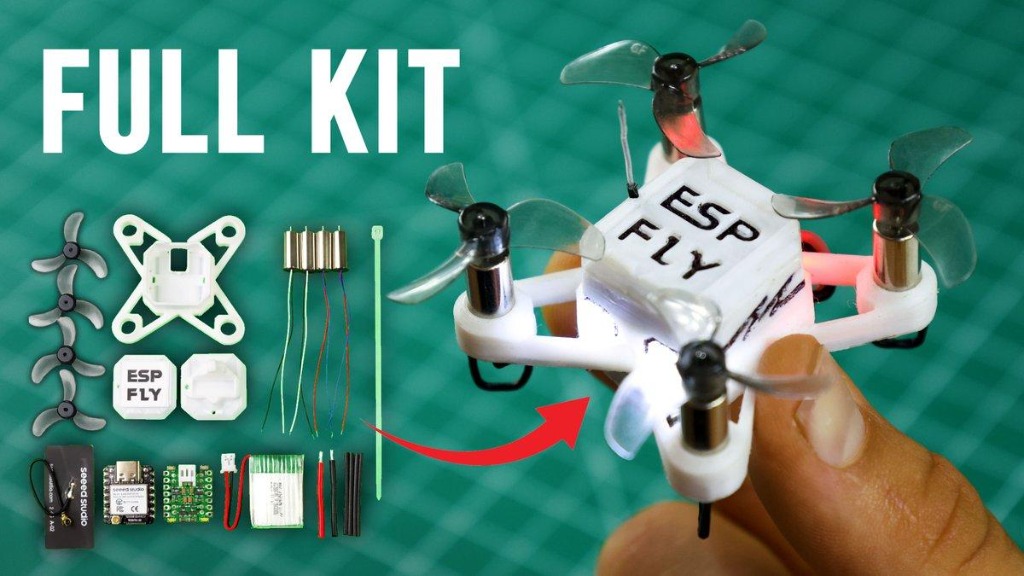
A drone weighing only a few dozen grams has to solve a surprisingly difficult engineering problem: it must translate a pilot’s commands into precise motor movements while constantly correcting for changes in its orientation. The challenge is not simply making four motors spin. It is coordinating sensing, computation, communication and physical motion within a very small, lightweight system.
The ESP-FLY project↗, developed through a collaboration between Seeed Studio and Max Imagination, offers a compact way to explore that challenge. Built around the XIAO ESP32-S3 microcontroller, this open-source micro quadcopter combines wireless control, motion sensing and motor driving in a platform designed for learning and experimentation.
Its most interesting engineering lesson is how a relatively small embedded computer can coordinate an entire flying system—and why the quality of that coordination matters more than the number of features packed into the hardware.
A quadcopter moves by varying the thrust produced by its four rotors. Increasing or decreasing thrust across different motors changes the forces and torques acting on the aircraft, allowing it to tilt, rotate and move through the air.
But a drone cannot rely on a pilot to make every tiny correction. Even when the intended command is to hover in place, small disturbances and differences in motor response can change its attitude—the orientation of its body in space.
ESP-FLY addresses this through an onboard flight controller built around the Seeed Studio XIAO ESP32-S3↗. A custom flight-control board integrates an MPU-6050 inertial measurement unit (IMU), four MOSFET motor drivers and status LEDs. The IMU combines a gyroscope, which measures rotational motion, with an accelerometer, which measures acceleration, including the effect of gravity.
Together, these components provide the essential ingredients for a feedback-control system: measurements of motion, a processor to interpret them, and actuators that can change the drone's behaviour.
This is the first important insight from ESP-FLY: stable flight emerges from continuous correction, not from simply choosing the right motor speeds once.
2. A Feedback Loop Connects Sensors to the Propellers
The key mechanism behind a stable quadcopter is the flight-control feedback loop.
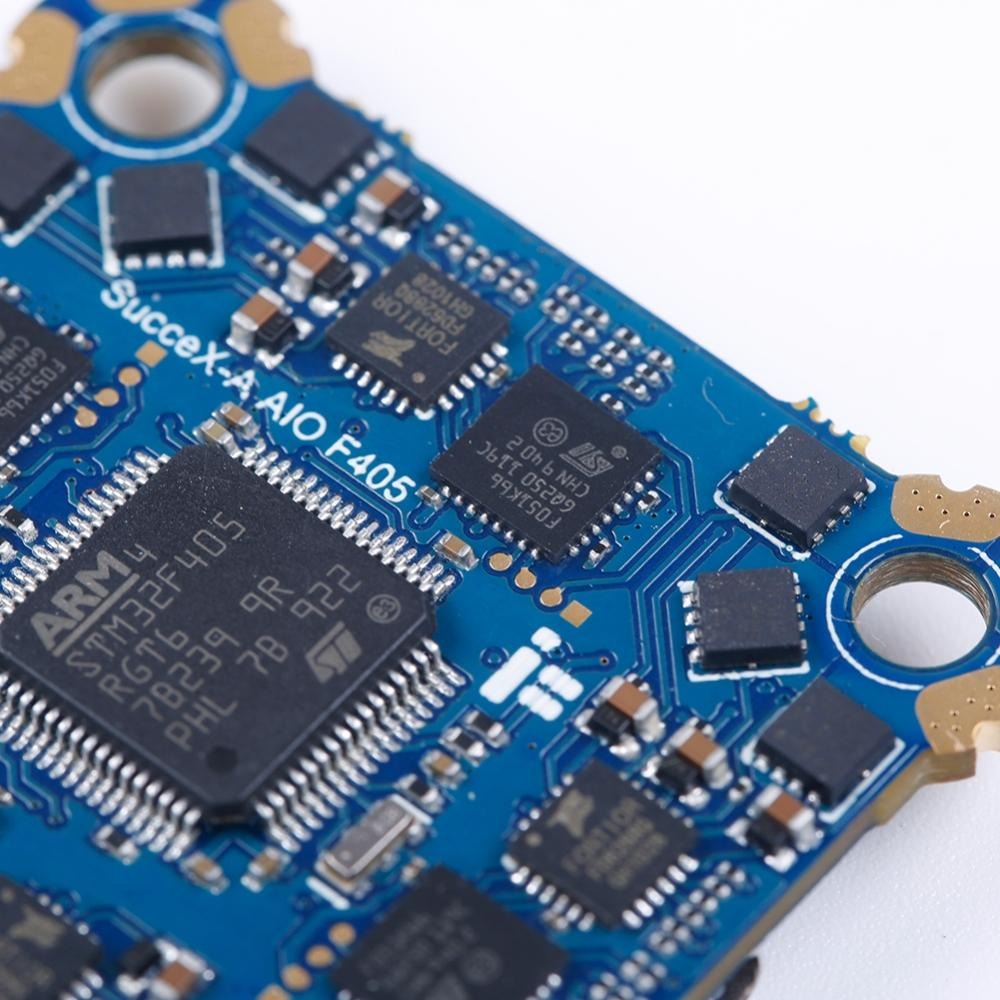
The controller compares the aircraft's measured motion with the motion required by the pilot's input. If the drone begins tilting away from its intended attitude, the flight-control logic can adjust motor outputs to counter the error. Those adjustments change the aircraft's motion, producing new sensor readings that inform the next correction.
This is a form of closed-loop control: the system uses the effects of its own actions to decide what to do next.
The distinction matters because a drone operates in a changing physical environment. A fixed motor command cannot reliably compensate for every disturbance. Feedback allows the controller to respond to what the aircraft is actually doing.
ESP-FLY's documented hardware includes a six-axis IMU and four motor-driving channels, while its firmware options include Espressif's ESP-Drone↗ and the alternative ESP-FC firmware↗. The repository describes self-leveling in Angle mode and a manually controlled flight platform—not autonomous navigation.
That boundary is important: stabilizing a drone's orientation is a different engineering problem from deciding where it should fly.
3. Wireless Control Is Only One Part of the System
ESP-FLY offers two documented control approaches, each illustrating a different way to connect a human operator to an embedded system.
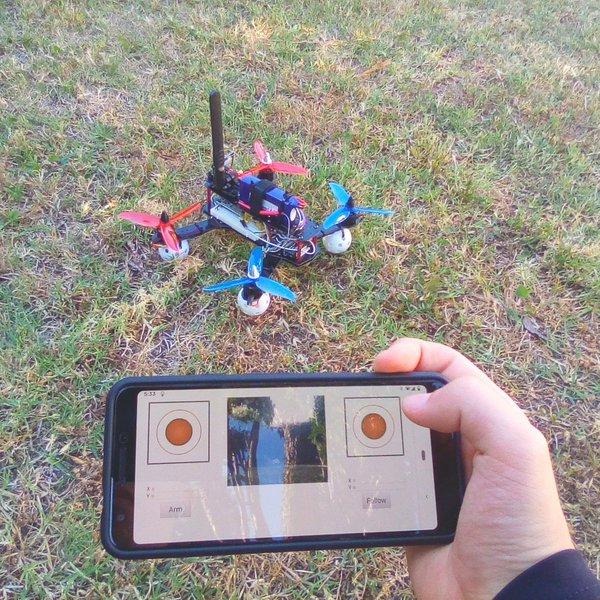
These are alternative firmware and control workflows, rather than two modes that should automatically be assumed to work simultaneously.
The distinction is useful because wireless communication and flight stabilization have different responsibilities. The communication link carries pilot commands; the onboard controller must translate those commands into appropriate motor behaviour while responding to motion measurements.
The wireless link also introduces a constraint: commands may be delayed or lost. The repository describes failsafes intended to reduce the risk of a flyaway when the signal is lost. Such protection is a necessary part of the overall design, although the exact response depends on the firmware configuration.
The broader lesson is that a connected robot is not just a radio and a processor. It is a chain of responsibilities, and each link must behave predictably for the whole system to work.
4. Why Making the Drone Smaller Changes the Engineering
ESP-FLY's compact design brings another challenge into focus: every component competes for limited mass, space and battery energy.
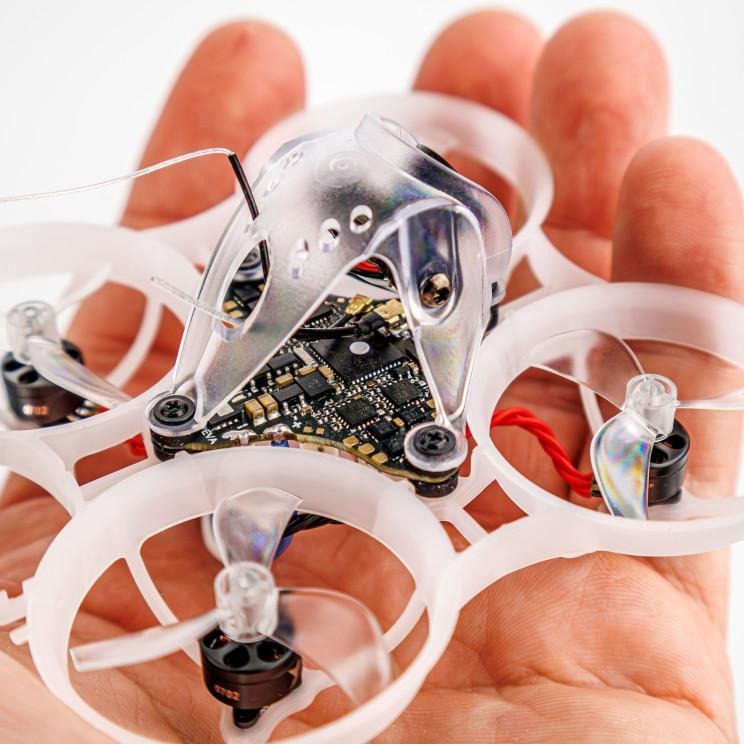
The repository specifies a single-cell, 3.7 V, 250 mAh lithium-polymer battery and reports flight times of approximately five minutes, with up to 5.5 minutes tested under suitable conditions. These figures are project-reported results, not a guarantee for every flight.
Adding a camera, increasing battery capacity or attaching a payload changes the total mass. The motors must then generate more thrust to support the aircraft, potentially reducing flight endurance or agility. Even a small addition can matter when the entire drone is so light.
This is a classic embedded-systems trade-off: improving one capability can place additional demands on power, mass or control performance elsewhere.
The project also illustrates the value of reusing open-source firmware rather than developing every software layer from scratch. ESP-FLY builds on Espressif's ESP-Drone software, while the alternative ESP-FC workflow provides another route into drone configuration and control. This gives learners a practical way to explore how hardware interfaces with existing embedded software without having to design an entire flight stack from the beginning.
Compactness should not be confused with simplicity. The small airframe hides a tightly coupled system in which sensing, control timing, wireless communication, battery performance and motor response all affect the final result.
5. From Components to a Working Flying System
ESP-FLY is interesting because it makes a complex control problem tangible. A small microcontroller reads motion sensors, processes pilot commands and controls four motors, while the physical aircraft continuously responds to those decisions.
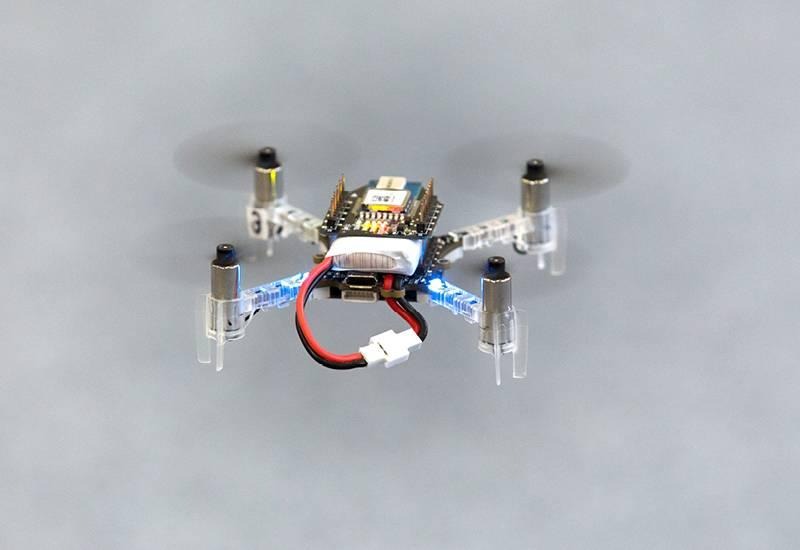
The project shows how much engineering depends on coordinating components rather than treating them individually. A capable processor is not enough; the system also needs useful measurements, appropriate control logic, responsive actuators and sensible handling of communication failures.
For students and aspiring engineers, that is the lasting insight: a successful embedded system is not simply a collection of working parts. It is a collection of parts that work together under real-world constraints.
ESP-FLY offers a compact platform for exploring that principle through robotics, wireless communication and flight control—without requiring autonomous navigation or advanced artificial intelligence to make the engineering meaningful. At MedhaArc, these foundational micro-avionics concepts are implemented hands-on in the MedhaArc ESP-Micro STEAM Drone Kit and through our institutional setups in MedhaArc Labs.
Hardware Architecture & Verified Specs
The ESP-FLY flight controller is designed specifically for weight optimization and micro-quadcopter physics. Below are the verified component specifications extracted from the project documentation and hardware bill of materials.
| Component | Subsystem Role | Specification | Verification |
|---|---|---|---|
| Seeed Studio XIAO ESP32-S3 | Main Flight Controller & MCU | Dual-Core Xtensa LX7 @ 240MHz, 2.4GHz Wi-Fi + BLE 5.0, 8MB PSRAM | ✓ Verified |
| InvenSense MPU-6050 | 6-Axis Inertial Measurement Unit (IMU) | 3-Axis Gyroscope (±2000°/s) + 3-Axis Accelerometer (±16g), I2C @ 400kHz | ✓ Verified |
| 4x Coreless Brushed DC Motors | High-RPM Propulsion Actuators | 716 micro coreless motors driving 31mm 3-blade propellers | ✓ Verified |
| 4-Channel MOSFET Motor Drivers | PWM Motor Speed Control | Low-RDS(on) N-channel MOSFETs (SI2302) with flyback protection | ✓ Verified |
| 1S 3.7V 250mAh LiPo Battery | Onboard Power Supply | 3.7V nominal, 25C discharge rate, ~5–5.5 min flight duration | ✓ Verified |
| 3D-Printed Whoop Airframe & Canopy | Chassis & Electronics Protection | Ultra-lightweight polymer frame (< 28g all-up weight) | ✓ Verified |
Repository Structure & Firmware Workflows
The official Seeed Studio Co-Create repository provides all firmware code, KiCad design files, and 3D print assets needed to assemble and flash the drone from scratch.
| Path / Module | Documented Purpose | Status |
|---|---|---|
| Firmware/ESP-Drone | Espressif official Wi-Fi AP flight controller firmware | ✓ Inspected |
| Firmware/ESP-FC | Alternative firmware supporting ESP-NOW low-latency RC transmitter control | ✓ Inspected |
| Hardware/PCB | KiCad schematics and Gerber manufacturing files for custom carrier board | ✓ Inspected |
| Hardware/3D_Models | STL files for lightweight whoop frame, motor pods, and top canopy | ✓ Inspected |
Pre-Flight Checks & Safety Guidance
Operating micro quadcopters requires attention to battery safety and fail-safe testing prior to full throttle flight.
Operational Safety Notice
Always calibrate the MPU-6050 accelerometer on a flat surface before initial takeoff. Ensure firmware failsafe cutoffs are enabled to immediately spin down motors in the event of a Wi-Fi or ESP-NOW connection dropout, and never discharge the 1S LiPo battery below 3.3V.
Official Repositories & Engineering Documentation
Explore the primary open-source codebases, firmware documentation, and manufacturer specifications below.
https://github.com/Seeed-Projects/Co-Create_ESP-FLY
https://github.com/espressif/esp-drone
https://github.com/rtlopez/ESP-FC
https://www.seeedstudio.com/
Build Real Aerospace & Autonomous Robotics Hardware
At MedhaArc Labs, we transition students and engineering learners from passive tutorials to physical engineering. Explore our hands-on drone flight controller kits, 6-DOF robotic arm testbenches, and institutional STEAM curriculum.